Keep the aggregate.
Add the intelligence.
HibouAir sensors and ControlHub turn an existing ventilation system into a demand-controlled one - no aggregate swap, no ductwork rebuild, no multi-week shutdown for your customer.
// Installed in days on systems already in the building .
A full replacement is a hard sign-off. A retrofit isn't.
Most ventilation aggregates already in buildings today are mechanically sound. What's missing isn't the box - it's the sensing and control layer that would let it run on demand instead of a fixed schedule. Pitching a full replacement just to get that capability is why so many demand-control conversations stall at the budget committee.
- Weeks of work, with ceiling and duct access through the building
- Tenants relocated or disrupted during install
- A capex line that needs board or committee sign-off
- Often the only point in years a customer revisits ventilation at all
- Sensors and hub fitted in days, around occupied space
- Building stays in use throughout the install
- A line item your customer can approve without a capex process
- A live dashboard gives you a reason to come back next quarter
Demand control lives in the data and the signal - not the aggregate.
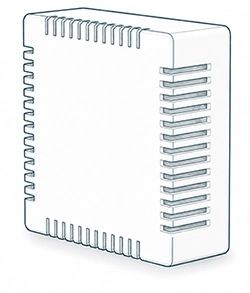
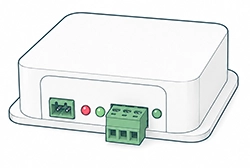
HibouAir sensors measure CO2, VOC, particulates, temperature and humidity directly in the space or duct. ControlHub reads that data and outputs the modulation signal your aggregate's fan, damper, or BMS input already accepts. The aggregate doesn't need to know anything changed - it's just finally being told what the room actually needs.
Four steps. No specification rewrite.
Mount the sensors
Wireless HibouAir units fit into the room or duct in minutes. No rewiring, no false-ceiling work.
Pair with ControlHub
Sensors talk to ControlHub over Bluetooth Low Energy. ControlHub bridges out to the aggregate's existing control input or the BMS.
Set the thresholds
Define the CO2, VOC or occupancy bands that should trigger more or less airflow, per room or per zone.
Hand over the dashboard
Cloud, desktop or mobile access gives the building owner live and historical data - and gives you before/after numbers to justify the job.
Built around how you actually sell ventilation work.
A job customers approve
It's a retrofit line item, not a capital project. Most customers can sign off without a board, a tender, or a multi-year payback case.
Fewer return visits
Remote diagnostics and live dashboards mean most issues get caught and explained before you need to drive back to site.
Works with what's already installed
ControlHub bridges to standard fan, damper and BMS control inputs. You're not locked into one aggregate manufacturer to offer demand control.
A reason to stay on the account
Energy and air-quality reports give you something to bring back to the customer next quarter, not just an invoice once.
Where this retrofit pitch lands best.
Variable occupancy
Meeting-heavy days against quiet ones - exactly the swing demand control is built for.
Classrooms
Rooms sit empty for long stretches of the day. Fixed-schedule ventilation wastes energy on all of them.
Clinical buildings
Strict air quality needs, without the budget appetite for an aggregate swap in a live facility.
Smart buildings
Different tenants, different schedules, one ventilation system - a hard fit for fixed flow rates.
Manufacturing
Process areas with shifting occupancy, where shutting the building down for a retrofit isn't an option.
Ecodesign is pushing toward demand control either way.
EU Ecodesign requirements for ventilation units increasingly reward demand-controlled operation. Buildings that can't justify ripping out a working aggregate still need a path toward lower energy use and compliance - a sensor and control retrofit is that path, without the capex case a full replacement requires.
Commonly cited range for energy reductions from demand-controlled ventilation retrofits, depending on occupancy pattern, building type, and climate.
Built to bridge into what's already there.







Get installer pricing and a sample retrofit spec.
Tell us about a building you're already quoting on and we'll send back what the retrofit would look like - sensor count, ControlHub placement, and an estimated install time.